PHYSICS 322, OBSERVATIONAL ASTRONOMY
COURSE OUTLINE (SPRING 2008)

Recommended texts for the course

Observational Astronomy
by 
Birney, Gonzalez & Oesper
Handbook of Astronomical Image Processing
by 
Berry & Burnell

Time: Wed. 6-9 pm (plus other clear nights)
Room: 5th Floor, Faculty
Prof. Dale E. Gary

Office: Tiernan 101
Office Hours: W 2:00-4:00 pm

Phone: (973) 642-7878

e-mail: dgary@njit.edu

Course Web Page: http://web.njit.edu/~dgary/322

  • Readings: Read over the lab assignment before the corresponding class period.
  • Lab Notebooks: The procedure for each lab is described in the lab assignment.  You must keep a lab notebook containing your notes while you take and analyze your data.  These will be turned in with each lab report.  Lab reports are the final product of each lab assignment, and must be prepared as a separate document, well illustrated and explained.  Neatness and thoroughness counts!
  • Grades: The course grade will be based on your lab notebooks (30%), lab reports (50%), attendance and class participation (20%). The grading breakdown is as follows:
  • 85-100 % A
    80-84% B+
    70-79%

    B

    65-69% C+
    50-64% C
    40-49% D
    0-39% F
  • Observing Sessions: Attendance is required every Wednesday night (the weekly lecture/demonstration and observing session, cloudy or clear).  Missing, without a doctor's excuse, a Wednesday night on which observing is possible will result in a 5% drop in your grade. Optional observing sessions will also be held each clear Tuesday and Thursday. You are strongly encouraged to come on these nights. All observing sessions are on the roof of Faculty Hall.
  • Due Dates: The due dates for the assignments are shown below.  You are expected to complete the labs on these dates.  If you have a legitimate excuse for not getting the lab done on time (i.e. equipment or weather not cooperating), seek permission to turn it in late from Prof. Gary.  A late lab without express permission will receive only half credit. Bad weather is NOT an excuse if it is clear on Tuesday/Thursday. In the case of a run of bad weather, you will be supplied with data taken by the instructor on an earlier date, so that lab due dates need not be missed.
  • Final Project: The "final exam" will consist of a final project of your choice. The final project will count as two labs. A potential list of topics is given below, or you can choose your own. Choice of topic is due on March 21. You should start on your final project by the time we return from spring break, if not before. You should NOT expect to do observations during finals week. Your final project observations need to be completed during the regular semester.
  • Academic Integrity: NJIT has an honor code (see http://integrity.njit.edu/) that you are all expected to apply rigorously to your conduct in this course. All work that you submit must be your own. All written words and ideas must be your own, unless cited (and using quotes where appropriate). All books, web materials, or other sources that you consult must be included in a bibliography at the end of your report. Any violations will be reported to the Dean of Students.

  • The figure and table below show the schedule of due dates for the 7 lab assignments and final project for Spring, 2007.
    Click on the links in the table to download the PDF version of the lab assignment.


    Lab Number and Title
    Topics/Goals
    Reading Assignment
    Assignment Date
    Due Date
    Lab 1: Learning the System
    • Learn Aladin web interface
    • Learn to point the telescope (Cartes du Ciel)
    • Learn to operate the camera (MaxIm DL) and focus (Focusmax)
    • Learn basics of astrometry (Astrometrica)

    Observational Astronomy
    Chapt. 1, pp6-10; Chapt. 2, pp23-30; Chapt. 3, 35-46; Chapt. 4, pp72-76; Chapt. 5, pp84-88.

    Wednesday 01/23 Wednesday 02/06

    Lab 2: CCD Digital Imaging

    IDL Tutorial (pdf version)
    IDL Tutorial (html version)

    • Learn about CCD cameras
    • Learn calibration procedures (bias and dark frames)
    • Learn IDL image analysis
    • Learn about signal to noise ratio and photon statistics
    Observational Astronomy
    Chapt. 8, pp159-162, 165-168; Chapt. 9, all.
    Wednesday 02/06 Wednesday 02/20
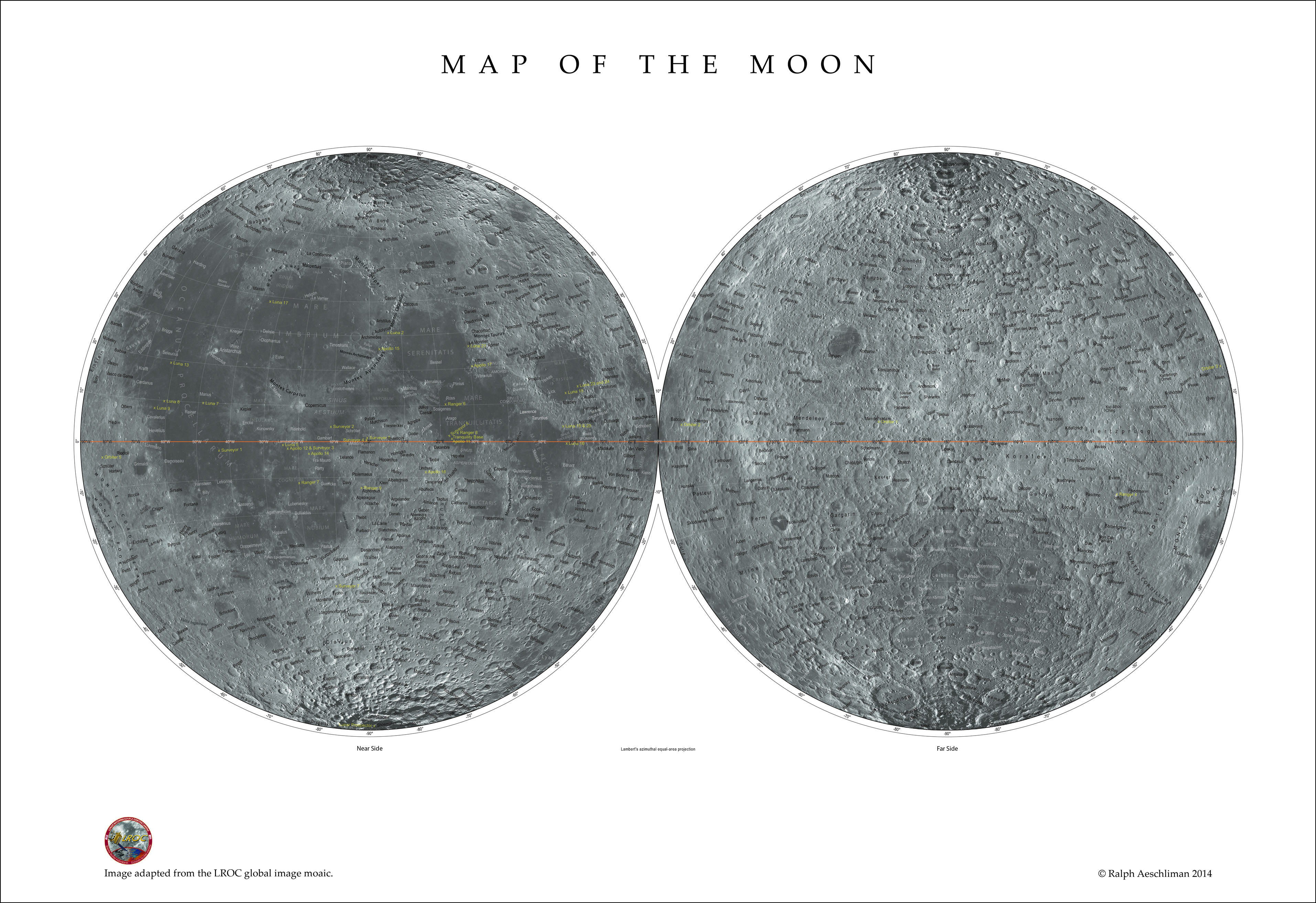
    Lab 3: Lunar Cartography
    • Learn to make mosaic image
    • Learn to combine mosaic images
    • Learn to overlay coordinate system for Moon
    Observational Astronomy
    Chapt. 1, all.
    Wednesday 02/20 Wednesday 03/05

    Lab 4: Atmospheric Extinction & Photometry

    G2V Star Catalog

    • Introduction to Photometry
    • Learn about standard stars
    • Take observations of same field over time
    • Fit trend line to observations
    Astronomical Image Processing
    Chapt. 10, all.
    Wednesday 03/05 Wednesday 03/26

    Lab 5: Imaging Asteroids

    IDL routine (ast_dist.pro)
    Matlab routine (ast_dist.m)

    • Precision astrometry and photometry of moving objects
    • Learn to obtain minor planet center information
    • Calibration (including flats), combining, and aligning of CCD images
    • Finding moving objects with Astrometrica.
    • Create minor planet center report
      Wednesday 03/26 Wednesday 04/09
    Lab 6: Eclipsing Binary Stars
    • Planning observations
    • Precision photometry
    • Obtaining light curves
    • Epoch fitting
    • Binary star analysis
      Wednesday 04/09 Wednesday 04/23
    Lab 7: Deep Sky Objects
    • Planning observations
    • Taking a long series of images
    • Calibration, combining of images
    • Adjusting the transfer function
    • Sharpening and digital processing
      Wednesday 04/23 Wednesday 05/07
    Final Project: Choose one of these, or suggest your own
    • Make a true-color deep sky image
    • Detect the transit of an extra-solar planet and determine its radius.
    • Detect the rotation of an asteroid
    • Determine the rotation rate of the Sun
    • Obtain a full cycle of an eclipsing binary star with good primary and secondary eclipses, and do full analysis
      Wednesday 03/26 Wednesday 05/14

    Useful Links:

    Data Repository
    Click above for access to your data


    New Jersey Clear Sky Clocks Find out a day or so in advance what the weather will be like for observing.
    Moon Phases in 2008 Check out whether the Moon will be a problem for your observations.
    Moon Map A detailed map of the Moon, with longitude and latitude lines.
    Minor Planet Center Many links for asteroid observation.
    Calsky Check out where planets and moons are, and what they look like on any date.
    Astronomy Picture of the Day Just a nice picture, often of current interest.
    Messier Object List The list of Messier Deep Sky Objects (clusters, nebulae, galaxies)
    New General Catalog List See images of all of the NGC objects.
    CCD University Learn details about CCDs and their use for Astronomy from Apogee Instruments

    Last Update: 2006 Dec 28