Update #14: Fences really do make good neighbor, if they are well designed.
When someone says "white picket fence" the first image that comes to mind is probably not just the fence, but the yard and the house behind the fence as well. Not all developments have or need fences - but they do all have boundaries. We are going to use fences to illustrate some of the design considerations that are important for every project - whether you have a white picket fence, a brick wall with a security gate, or just a site boundary.
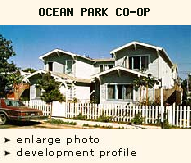 Use a Fence to Reinforce your Image
The first development we're going to look at really does have a white picket fence, but you are going to be surprised at the density. Ocean Park Co-op is a multi-unit building in Santa Monica, California for residents with low to moderate incomes. In this case, not only was the white picket fence used to provide privacy but also to reinforce the desired bungalow image of this development.
The design process included a significant community involvement component, and the neighbors wanted to make sure that this affordable housing development fit within their neighborhood. Including existing residents in the design process helped generate support within the community after they had stopped a market rate developer from building high-rise condominiums. But this is still a very large development - it just doesn't look like it. And if you go to the profile, you will see that we aren't showing you the one great image from this development - it works for its residents and their neighbors from all sides. There are 43 units (at a density of 41 units per acre) in this building, which is built over 77 semi-subterranean parking spaces. Sensitive detailing of the building, thoughtful entry to the site, and appropriate landscape elements drastically reduce the perception of size and scale of this development. The fence is the finishing touch that ties it all together and says "bungalow" not "large affordable housing development". Both the residents and the neighbors benefit from the thoughtful work that the design team put into this development, including the seemingly simple decision to use a simple, inexpensive white picket fence.
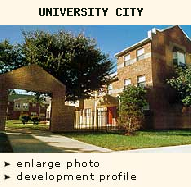 Creating Boundaries without Creating Barriers
Fences also don't have to be completely secure boundaries - sometimes just the implication of a boundary is what you need. University City Family Housing, a Philadelphia development which provides homes for families with very-low to low income, has a clear site boundary that is not gated.
The design used brick to reinforce the material used for the buildings. The pitch and scale of the gable over the entryway also matches that of the building next to it. At the same time the entry and the fence don't wall off the project from the street. Imagine if the 7'-0" brick wall went straight from the entry to the building instead of breaking for the open iron fence. Not only would it be uninviting from the outside, it would be unpleasant from the inside as well. The combination of fence materials in this case are used to make a welcoming entryway which provides a clear line between the public area outside the development and the semi-private area inside, without walling off the residents from their neighbors, or vice versa.
Secure Fencing Doesn't have to be Harsh Fencing
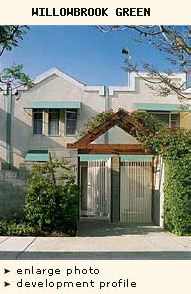 The last project we are going to look at, Willowbrook Green Apartments, is in a tough neighborhood in south central Los Angeles and provides homes for families with very low and low incomes. Look at the primary materials of this gate - they could be pretty harsh, just concrete block and steel. But the design team in this case used three simple and inexpensive design strategies, which made even these substantial fences feel welcoming instead.
The first is that the concrete block walls are not level across the top. Stepping them up to the gate adds visual interest and softens the severity of a concrete block wall. It is hard to overestimate the impression that designing something thoughtfully makes. Just the fact that someone paid attention and didn't build a standard concrete block wall says to the residents here that their concerns, and their desire for a secure and pleasant quality of life, are taken seriously.
Secondly, the gates are secure steel gates, but painting them white and making them visually open keeps them from feeling as harsh as they might were they painted a darker color or solid. This decision wasn't just about making the gates feel light and less oppressive. It also makes it easy to see if someone is just inside or just outside the gate - something that greatly increases the feeling of security for the residents.
Finally, look at the trellis over the entry. This is no more than just standard lumber that has been cut to length, bolted together, stained and attached to the concrete block columns that support the entry gates. But it is also a lot more than that, and the impact it has is significant. It adds warmth to the entry as well as providing a place for vines which makes the entry even more inviting. Notice something else about this trellis and how it interacts with the fence and gate. By grouping the entries together in pairs, it gives each entry a larger and more generous feel - which goes a long way toward establishing a sense of pride for the residents. The thoughtful design of this fence adds a lot of value for just a little money.
As you look at your city over the next month, pay attention to the fences.
Think about which of them you like, which of them you don't, and why. In just about any community there are examples of good fences and bad fences. If you understand what makes them work in their contexts, you can use the lessons of your own community to make your next affordable housing development even more successful than your last.





