Researching the History of Shorthand
Early
English Shorthand Analysis from the papers of Robert Erskine, ~1760
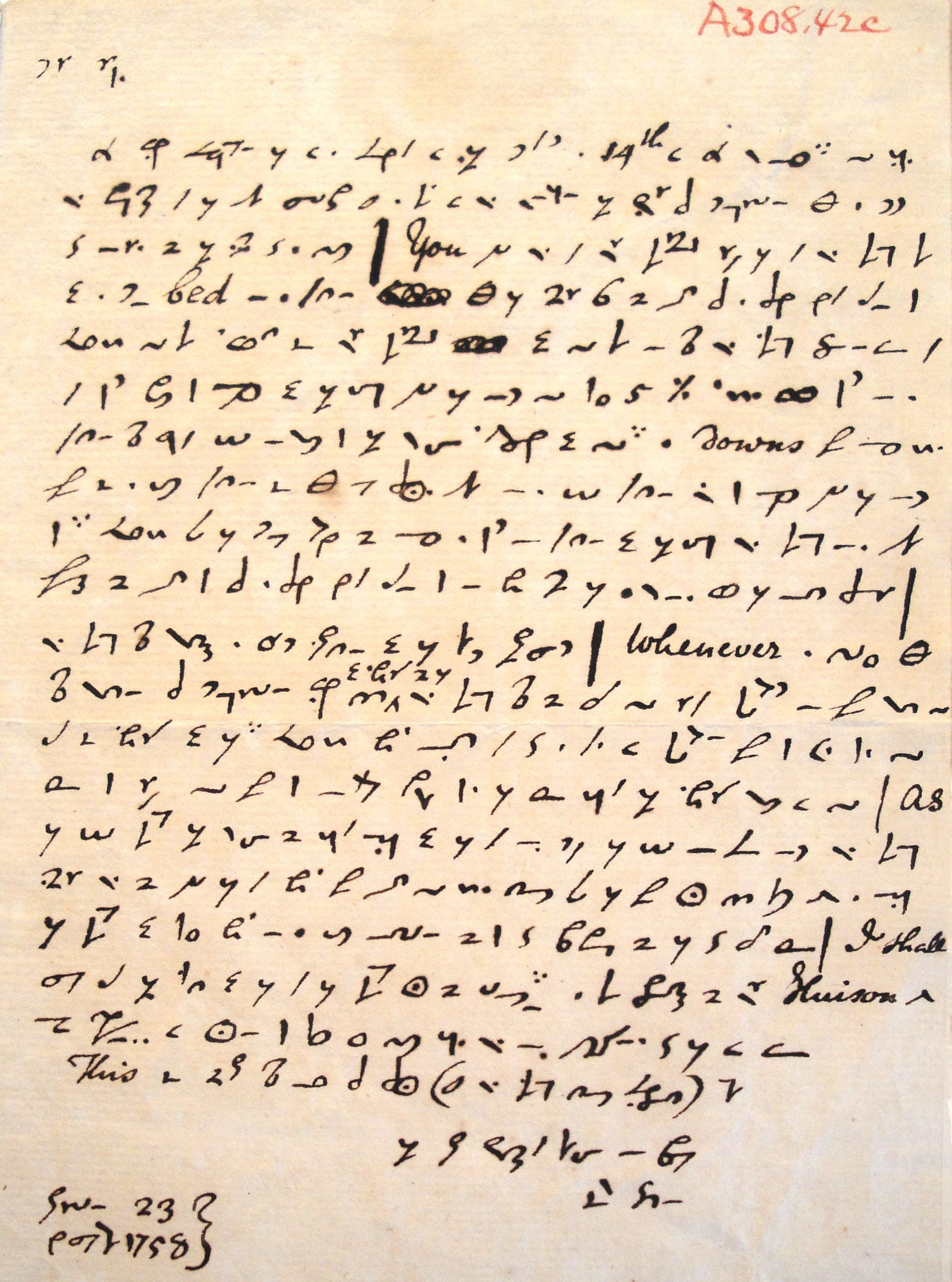 |
Breakthrough! Archaic English Shorthand Decoded Dear Robbie, This comes acquainting you of the receipt of yours dated the 14th
of this month. It gives me satisfaction that you have placed with
the weight of my managing your affairs at Dunfermline, which I did
as nearly to your desires as I could. You tell me that Mr. [W***]
wrote you that my wife was for the down bed and the ticking which
you desire us to take at the price set upon them. However, it was
a mistake in Mr. [W***] for it was and is my wife’s opinion
that that bed sold be kept for yourself until you need it, both
because ‘tis a very good bed and the ticking is quite new
and made them your mother the price for it. The downs will keep
very well in the old ticking in which not presently are and the
new ticking may be kept until you need them. However, if you don’t
choose to keep the bed and ticking for yourself my wife and I are
willing to take them at the price set down them and should return
you the money when you think proper. My wife is making the thread
stockings for you broad striped. Whenever the cloth which is making
at Dunfermline comes here ^ (for shirts to you) my wife is to see
it right bleached and will make it up in shirts for you. However,
she thinks that as the time of bleaching will be over before it
can be right it will be next summer before you can get your shirts
made of it. As you now want your mother to get changes for you that
no doubt you now and then need, my wife desires me to tell you that
she will take it very kindly if you will send here orders about
the changes you want for both she and I would [********] to be as
serviceable to you as we can. I shall put up your books for you
that you want sent to you in London. I was speaking to Mr. Huison
about any questions of sending them but he could give me no [*****]
as you of one
St*ver*n 23 |
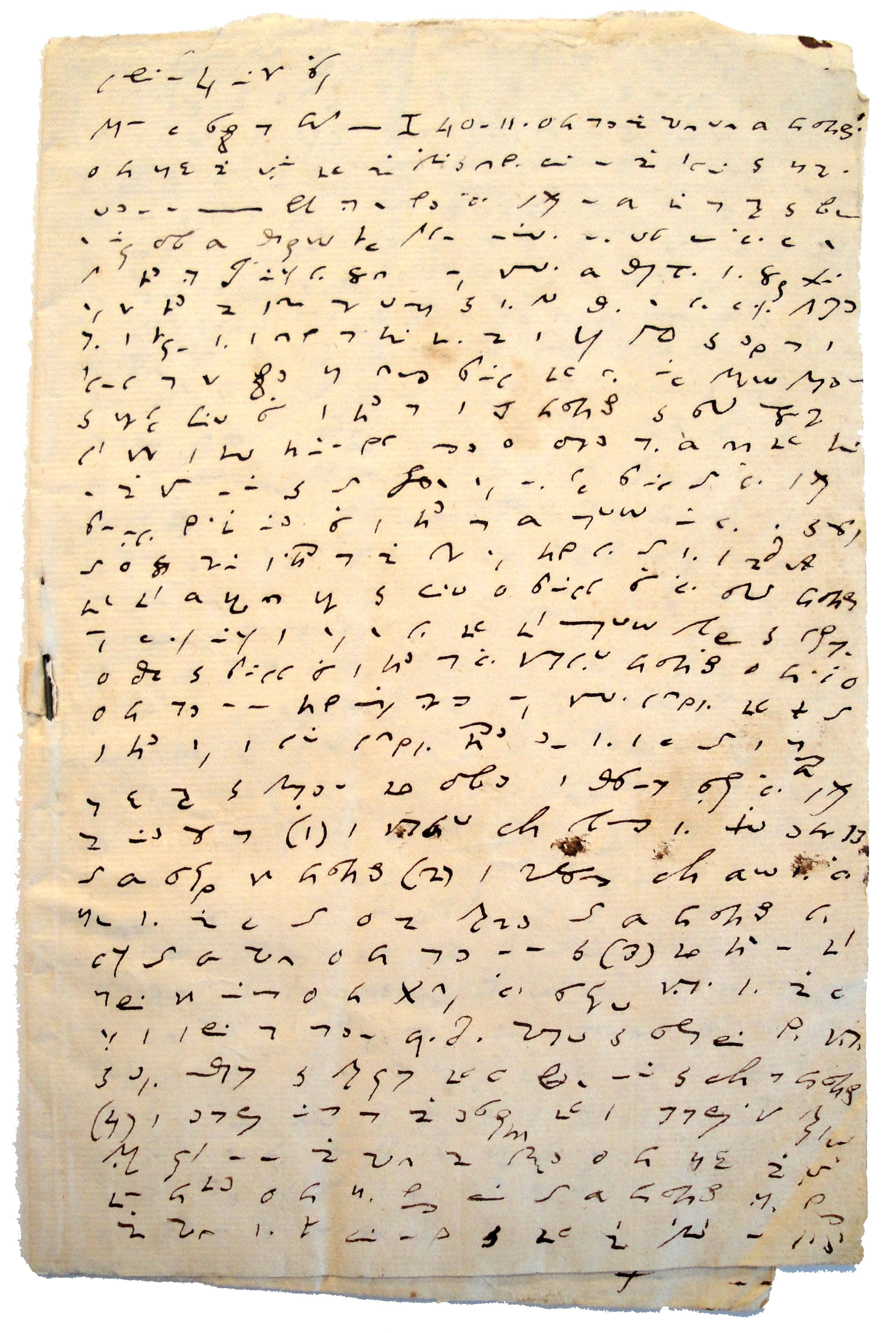 |
Early English Shorthand Variations Shorthand Families, Branches, and StructuresShorthand emerged in England at the same time English writing emerged (for, as any student can tell you, English has FAR too many letters). It emerged in time to help pirate Shakespeare's plays and consequently motivate his friends to publish them, resulting in the First Folio (Adele Davidson). And, as soon as shorthand emerged, branches and varieties emerged as well. Some shorthand was taught in private schools but most was privately taught in homes. Not all shorthand systems were documented. Moreover, the many forms of shorthand tend to diverge, like language itself, as soon as the the author puts pen to the page. The shorthand letter above was written by Robert Erskine's brother or cousin James. Erskine brought the letter to America where it is preserved, among his papers, in Newark. The document at the left is Robert Erskine's own shorthand writing: it's a slightly different form from that of his brother or cousin, using different conventions and methods. Thus, there are not only families or varieties of shorthand (Shelton, Rich, Mason, Taylor, Gurney, Pitman and Gregg), but there are also varieties of shorthand within a family. If you have an example of archaic shorthand that you would like to translate, contact me at cjohnson@njit.edu. |
Humanities, University Heights, Newark, NJ, 07102; cjohnson@njit.edu
