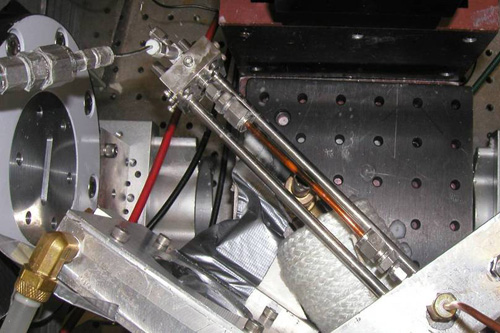
Beamline X18B
Research Types: EXAFS and XANES in biology, chemistry, physics, geology and
environmental sciences
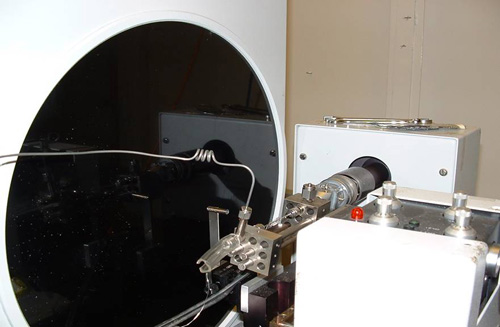
Beamline X7B
Research Types: Crystallography, wide angle scattering, time-resolved diffraction.
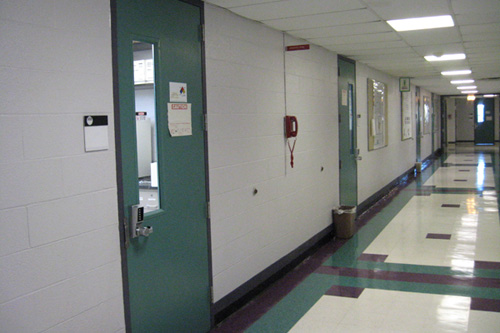
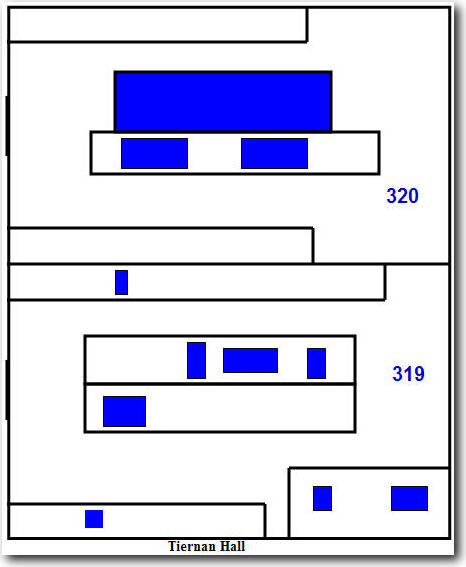
Our laboratory
Welcome to our lab for visiting or exchanging ideas. We are in Room 319, 320 and 360,
Tiernan Hall, NJIT.
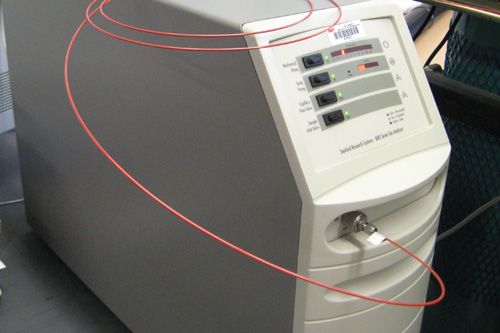
Mass spectroscopy
Offer an efficient, cost-effective solution for a wide range of applications. These
mass spectrometers simplify the task of on-line process monitoring, analysis of gas
species, leak detection, and troubleshooting.
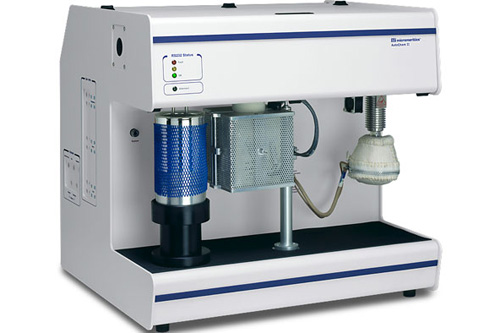
Autochem II 2920
A fully automated chemisorption analyzer that can provide your laboratory with the
ability to conduct a comprehensive array of highly precise studies of chemical
adsorption and temperature-programmed reactions.
Apparatus
High Pressure Gas Analyzers QMS100, QMS200 and QMS300
100, 200 or 300 amu systems
Pressures from 10 mbar to 1 bar
Better than 1 amu resolution
<0.5 second response time
Compact, transportable design
6 decades of dynamic range
RGA Windows software
RS-232 computer interface
AutoChem II 2920 Automated Catalyst Characterization System
Features
Powerful Windows operating and data reduction software
Three gas ports (prep, carrier, and analysis) contain four inlets providing the capability to perform four-gas sequential experiments
Four high-precision, independently calibrated mass flow controllers provide extremely accurate, programmable gas control
With the CryoCooler option, analysis temperatures can be ramped over the range of -70 °C to 1100 °C
Graphic reports for BET surface area, pulse chemisorption, heat of adsorption, and more. In addition, it has an integrated Grams/32® peak editor package which provides peak selection and editing, integration, data smoothing, rescaling, and overlay capability.
Overview
The AutoChem II 2920 is a fully automated chemisorption analyzer that can provide your laboratory with the ability to conduct a comprehensive array of highly precise studies of chemical adsorption and temperature-programmed reactions. With this single instrument, you can acquire valuable information about the physical properties of your catalyst, catalyst support, or other materials. It can determine catalytic properties such as percent of metal dispersion, active metal surface area, acid strength, surface acidity, distribution of strength of active sites, BET surface area, and more. The AutoChem II 2920 performs pulse chemisorption, temperature-programmed reduction (TPR), desorption (TPD), oxidation (TPO), and reaction analyses and does it automatically.
4561 Mini Bench Top Reactor (300mL)
It is made in moveable vessel style with a flat, PTFE gasket for higher temperatures up to 350 °C sealed with six cap screws in a split-ring cover clamp. The support system for these Mini Reactors is designed specifically to provide stability at stirring speeds up to 1700 rpm, in a compact mounting small enough to fit into a laboratory hood. The support system can also be adapted to accept any of the smaller vessels from the 4590 Micro Reactor Series.
Tubular reactors are always used in a continuous flow mode with reagents flowing in and products being removed.
GAS FEEDS Three reactant gas feed lines and one purge gas line, two includes a shut-off valve, filter, Mass Flow Controller (MFC), bypass valve, and reverse-flow check valve.
LIQUID FEED
One Liquid Feed, includes a filtered inlet line, Digital High Pressure Liquid Metering Pump (2500 psi), and reverse-flow check valve.
PRODUCT RECOVERY High Pressure Separator, includes a stainless steel vessel with 450 ml capacity that is equipped with manual drain valve and pressure relief valve set for 1450 psi . Incoming fluids pass through a water-cooled heat exchanger. A Back Pressure Regulator (BPR) provides for controlled release of gases from above Separator. This manual, spring-loaded, regulator maintains reactor pressures up to 1450 psi.
CONTROL SYSTEM Reactor temperature is controlled via Model 4838 Controller equipped with a panel meter for display of internal temperature. A second chassis is included to provide control and display of the gas flow rate. The liquid flow rate is changed using the face plate of the pump. Pressure is read on the inlet gage and is changed by rotating the hand knob on the BPR.
Flow rate range from 0.050 to 5 mL/min optimized for microbore, 2.1 and 4.6 mm columns.
System delay volumes optimized for fast chromatography.
Optional programmable solvent selection valve combines two out of four solvents for utmost flexibility giving you access to 4 different binary composition choices.
Early maintenance feedback (EMF) allows you to continuously track the long-term instrument usage.
Easy programming and control through the Instant Pilot module or through the Agilent ChemStation or EZChrom software.
Direct front access for quick exchange of maintenance parts.
Fast problem identification by self-diagnostics, built-in log books and preprogrammed test methods.
The Agilent 1200 Series Binary system is your first choice when your requirements demand the maximum in accuracy and precision for your HPLC gradients and low flow rates. It is the ideal system for all high-throughput and fast HPLC applications.
Agilent 7890A GC System
Overview
All the elements for perfect chemistry.
Adding an exciting new chapter to a 40-year history of GC leadership, Agilent’s 7890A GC gives you everything you need to take your lab to the next level of GC and GC/MS performance, including advanced separation capabilities, powerful new productivity enhancements and real-time self-monitoring instrument intelligence. Faster oven cool-down and backflushing let you get more done in less time, at a lower cost per sample. 5th-generation Electronic Pneumatics Control (EPC) and digital electronics set a new benchmark for pressure setpoint and retention time locking precision (0.001 psi) and help make the 7890A our most dependable GC ever.
Multimode inlet (MMI) includes spit/splitless, temperature ramping and large volume injection capabilities.
Convenient new Turn-Top design is built into each split/splitless (SSL) and Multimode inlet, allowing you to change liners in less than 30 seconds—without special tools or training
Breakthrough Capillary Flow Technology enables leak-free in-oven connections, enhances productivity and data integrity via backflushing and offers versatile, robust solutions for complex GC analyses.
Low Thermal Mass (LTM) technology provides direct rapid heating and cooling of capillary columns for extremely fast analytical cycle times and higher productivity
Blos NPD available for more stable operation and longer lifetime