|
|
Project Summary: La Ramona Morales Memorial Apts.
OWNER/DEVELOPER
Project P.P.E.P.
ARCHITECT
Tucson Community Development/Design Center
Centro de Arquitectura y Urbanismo para la Comunidad
CONTRACTOR
Carnes Construction
PROPERTY MANAGEMENT
Project P.P.E.P.
| FUNDERS: | TYPE: |
| HUD 202 | Loan |
| HUD Section 8 | Rent subsidy |
DEVELOPMENT TYPE:
New construction rental flats.
RESIDENT PROFILE:
Low-income seniors and persons with disabilities.
DENSITY: 23 units per acre
DEVELOPMENT PROFILE
| Type | #/Units | Size (sf) | Rents |
| Studio | 4 | 402 | $130 (HUD pays diff.) |
| 1 BR | 27 | 402 | $130 FMR and 30% income) |
| Total | 31 | | |
Community/laundry: 818, (includes office)
Courtyard: 8,650
Parking: 20, surface
Total site area: 58,300 or 1.34 acre
|
CONSTRUCTION TYPE
One-story tilt up concrete, slab on-grade, woodframe roof/int. walls.
DEVELOPMENT COSTS:
Land cost: $76,000; Constr. costs: $842,000; Other costs: $98,640;
Total development costs: $ 1,016,640 ($32,795/unit); Completed 1987.
|
|
|
LA RAMONA MORALES Memorial Apartments, Benson, Arizona
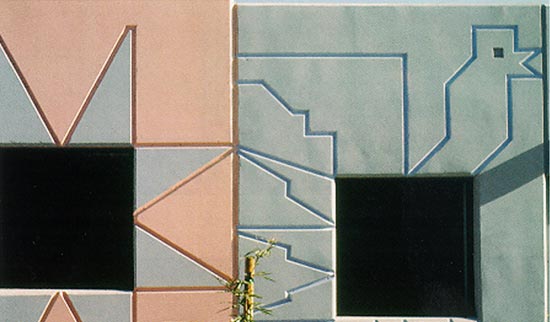
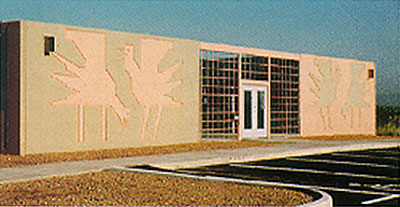
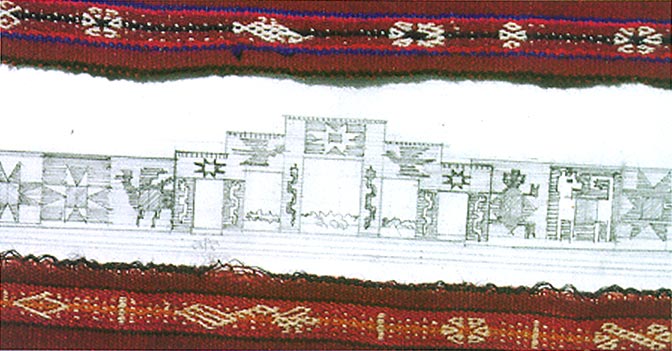
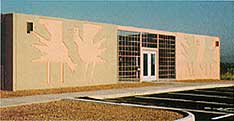
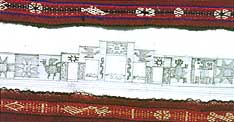
 Located in a small rural town in southeastern Arizona, these apartments have 30 units for the elderly and people with disabilities who typically pay 25 percent of their monthly incomes for rent. At 402 square feet, the units are quite small, but they are set around a common outdoor area. Architect Jody Gibbs of the Tucson Community Development/Design Center stated that because of the desert climate with high temperatures and scant rainfall, he had designed other Arizona housing with individual courtyards. The tree-lined common area is defined by the three entry gates and acts as a shaded interior street typical of desert regions. Because the grade changes by 10 feet from the west to the east of the site, each group of four units shares a tree-shaded level area which acts as a courtyard. Each such area is connected to the next level by a ramp. The construction technology is tilt-up concrete with 4-1/2-inch thick walls cast with patterns in various colors drawn from regional textiles, pottery and woodcarving. This use of standard technology to enrich simple forms demonstrates that housing for people with low incomes need not be aesthetically impoverished, but can incorporate the dignity and richness of local cultures. Located in a small rural town in southeastern Arizona, these apartments have 30 units for the elderly and people with disabilities who typically pay 25 percent of their monthly incomes for rent. At 402 square feet, the units are quite small, but they are set around a common outdoor area. Architect Jody Gibbs of the Tucson Community Development/Design Center stated that because of the desert climate with high temperatures and scant rainfall, he had designed other Arizona housing with individual courtyards. The tree-lined common area is defined by the three entry gates and acts as a shaded interior street typical of desert regions. Because the grade changes by 10 feet from the west to the east of the site, each group of four units shares a tree-shaded level area which acts as a courtyard. Each such area is connected to the next level by a ramp. The construction technology is tilt-up concrete with 4-1/2-inch thick walls cast with patterns in various colors drawn from regional textiles, pottery and woodcarving. This use of standard technology to enrich simple forms demonstrates that housing for people with low incomes need not be aesthetically impoverished, but can incorporate the dignity and richness of local cultures.
|